
UAE just quit OPEC and OPEC Plus. Discover what this means for oil prices, Saudi Arabia’s power, and India’s strategic positioning. Get the full analysis now →
Introduction
On the 26th, NSA Ajit Doval visited the UAE. 48 hours later, the UAE announced it’s officially exiting OPEC and OPEC Plus starting May 1st.
This isn’t just news—it’s a game-changer for global oil markets and Middle East geopolitics. As the third-largest oil producer in OPEC, the UAE’s departure threatens to destabilize the entire cartel system and challenge Saudi Arabia’s decades-long monopoly on oil price control.
You’re about to understand exactly why this matters for your wallet, your investments, and India’s strategic future.
What Just Happened? The UAE OPEC Exit Explained
The Timeline That Raises Eyebrows
Why the timing matters: Two days between a diplomatic visit and a historic economic decision? That’s not a coincidence.
What Is OPEC (and Why Should You Care)?
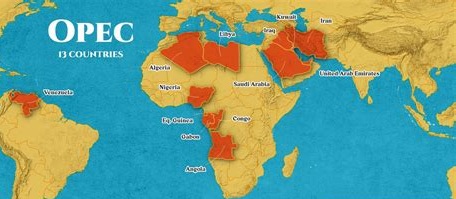
OPEC (Organization of Petroleum Exporting Countries) was formed in 1960. Together with OPEC Plus (which includes Russia and nine other countries), this cartel controls:
-
45-50% of global oil production
-
75% of global oil reserves
-
Artificial price regulation through production quotas
Think of OPEC as a monopoly cartel that manages how much oil countries can pump to keep prices high. The UAE just walked away from that agreement.
The Numbers That Explain Everything
UAE vs. Saudi Arabia: The Economic Split
Here’s why the UAE and Saudi Arabia want completely different things:
Why This Divergence Exists
Saudi Arabia needs high oil prices to survive:
-
50% of government tax revenue comes from oil
-
73% of all exports are petroleum products
-
Budget needs prices above $96/barrel to balance
UAE has diversified beyond oil:
-
Only 25.4% of GDP depends on oil
-
Strong tourism, real estate, finance, and logistics sectors
-
Can afford lower prices while pumping more volume
💡 Key Takeaway: The UAE wants to maximize oil revenue NOW before renewable energy dominates. Saudi Arabia needs high prices to keep its economy afloat. These goals are mutually exclusive.
7 Critical Implications of UAE’s OPEC Exit
1. 🛢️ OPEC’s Quota System Faces Its Biggest Challenge Ever
By leaving OPEC, the UAE directly challenges Saudi Arabia’s monopoly on controlling production quotas and oil prices.
What happens next:
-
UAE can produce without quota restrictions → production surge likely
-
Saudi Arabia’s price-setting power weakens significantly
-
Global oil price volatility increases
-
Other OPEC members may reconsider their position
2. 🌐 Geopolitical Realignments in the Middle East
The UAE-Saudi tension extends far beyond oil. This is about regional power:
Proxy Conflicts Where They Oppose Each Other:
-
Yemen: Different approaches to the civil war
-
Sudan: Competing interests and influence
-
Somalia: Divergent strategic approaches
Diplomatic Alignments:
-
UAE: Abraham Accords with Israel (open, public alignment)
-
Saudi Arabia: Mutual defense agreement with Pakistan
-
Iran: Completely different stances during recent tensions
3. 💸 Economic Dependency Shapes National Strategies
This is the core driver behind the UAE’s decision:
Saudi Arabia’s dilemma: Heavy oil dependence = must keep prices high
UAE’s advantage: Diversified economy = can prioritize volume over price
This reflects evolving economic resilience models in Gulf states. The UAE is betting that economic diversification gives them flexibility Saudi Arabia lacks.
4. 🤫 Strategic Diplomacy: India’s Role in the Middle East Shuffle
The India connection is critical:
-
NSA Ajit Doval’s UAE visit came just before the OPEC exit announcement
-
UAE leaders met Prime Minister Modi without publicizing details
-
India is choosing sides strategically amid emerging Middle East blocs
What this signals: India’s proactive engagement in Middle Eastern geopolitics to:
-
Secure energy interests
-
Foster strategic partnerships
-
Position itself amid regional realignments
5. 🔍 The Future of Global Oil Markets Is Uncertain
The breakdown of OPEC unity raises major questions:
-
Will future cooperation between producers collapse?
-
Will price volatility become the new normal?
-
How will this impact global energy transition trends?
-
What does this mean for non-traditional energy policies in traditional oil economies?
6. 🕊️ Contrasting Approaches to Regional Conflicts
UAE’s approach:
-
Aggressive stance
-
Open alignment with Israel
-
Direct interventions in regional wars
Saudi Arabia’s approach:
-
More negotiation-driven tactics
-
Different vision of regional leadership
-
Alternative security strategy
These aren’t just policy differences—they reflect competing visions for who leads the Middle East.
7. 📈 Oil Production Targets Signal Urgency
UAE’s push to increase production from 3.6M to 5M barrels/day suggests critical urgency:
The UAE’s calculation:
-
Monetize hydrocarbon resources before renewable energy dominates
-
Extract maximum value from oil reserves NOW
-
Use revenue to fund diversification into renewables and other sectors
This highlights the tension between short-term economic planning and long-term sustainability goals.
Pro-Tip: What This Means for You
🎯 Pro-Tip: If you’re an investor, trader, or simply someone who pays for petrol, watch these three indicators over the next 6-12 months:
Crude oil prices (Brent/WTI) — expect increased volatility
UAE production numbers — will they hit 5M barrels/day?
OPEC Plus cohesion — will other members follow UAE’s lead?
For India specifically: This is a strategic opportunity. India can negotiate better energy deals with a UAE that’s no longer bound by OPEC quotas.
How This Affects India: Strategic Opportunities & Risks
The Good News for India
Energy security through diversified partnerships:
-
UAE is no longer bound by OPEC production limits
-
Potentially more stable oil supply from UAE
-
Stronger bilateral energy negotiations
Diplomatic positioning:
-
India maintains relationships with both Gulf powers
-
No need to choose between UAE and Saudi Arabia (yet)
-
Strategic timing of high-level visits suggests advance intelligence
The Risks to Watch
Short-term volatility:
-
Price swings could impact India’s import bill
-
Current account deficit may worsen if prices spike
-
Inflation pressure on petrol, diesel, and transportation
Long-term uncertainty:
-
If OPEC Plus collapses, global oil markets destabilize
-
Energy transition acceleration could strand UAE oil assets
-
Regional conflicts could disrupt supply chains
FAQ: UAE OPEC Exit Quick Answers
When does UAE officially leave OPEC?
UAE’s exit becomes effective May 1st (year based on current date: 2026).
How much oil does UAE produce compared to Saudi Arabia?
UAE is currently permitted 3.6 million barrels/day but wants to reach 5 million barrels/day. Saudi Arabia is the largest OPEC producer (exact quota varies by agreement).
Will oil prices go up or down after UAE exits OPEC?
Short-term: Increased volatility (could go either way)
Medium-term: Likely downward pressure if UAE increases production significantly
Long-term: Depends on whether other OPEC members follow UAE’s lead
Is India involved in UAE’s OPEC decision?
While there’s no public evidence India directly influenced the decision, the timing of NSA Ajit Doval’s visit and discreet meetings with PM Modi suggest India is strategically positioning itself amid the geopolitical shifts.
What is OPEC Plus?
OPEC Plus = OPEC members + Russia + 9 other non-OPEC oil producers. Together they control ~50% of global oil production.
[Insert link to related internal post about understanding oil market dynamics]
Conclusion: The New Middle East Order Is Here
UAE’s OPEC exit isn’t just an energy market story—it’s a geopolitical earthquake with ripple effects across:
✅ Global oil prices and market stability
✅ Middle East power balances and emerging alliances
✅ India’s strategic positioning in the region
✅ The pace of global energy transition
The “new team formations” in the Gulf suggest we’re witnessing the beginning of a major shift, not a one-time event. UAE’s urgency to monetize oil before renewables dominate reflects a strategic calculation that the clock is ticking on hydrocarbon profitability.
For India, this is both an opportunity and a challenge. The strategic diplomacy—Doval’s visit, Modi’s discreet meeting with UAE leaders—suggests India is playing this game smart.
What’s Your Take?
Will UAE’s OPEC exit:
-
📉 Drive oil prices down (good for India’s import bill)?
-
📈 Create chaos and volatility (bad for global economy)?
-
🔄 Accelerate the renewable energy transition?
Drop your prediction in the comments below 👇 — I read every response and feature the most insightful ones in follow-up articles.