
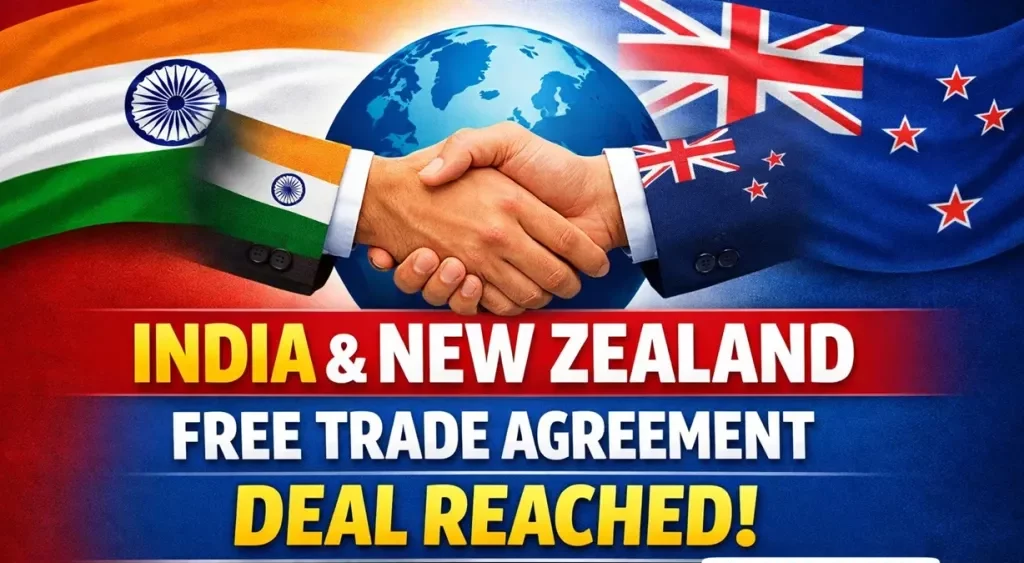
India’s Free Trade Agreements (FTAs) are shaping the country’s global economic future. With a mix of active agreements, ongoing negotiations, and dormant deals re-emerging in policy discussions, understanding India’s FTA ecosystem is crucial for businesses, policymakers, and investors.
This guide provides a complete, updated overview of India’s FTAs in 2026, including strategic insights and key clauses.
🧾 What is an FTA?
A Free Trade Agreement (FTA) is a treaty between countries to reduce trade barriers like tariffs and quotas.
India also signs:
- CEPA (Comprehensive Economic Partnership Agreement)
- CECA (Comprehensive Economic Cooperation Agreement)
These go beyond goods and include:
- Services
- Investments
- Mobility of professionals
🟢 Active FTAs (Currently in Force)
India has operational trade agreements with several key partners:
- India–ASEAN FTA
- India–Japan CEPA
- India–South Korea CEPA
- India–United Arab Emirates CEPA
- India–Australia ECTA
- India–Singapore CECA
- India–Malaysia CECA
🔍 Key Features
- Tariff elimination (up to 90%)
- Digital trade facilitation
- MSME export support
- Faster customs processes
🔵 FTAs Under Negotiation (In Process)
India is negotiating major agreements with:
- India–United Kingdom FTA
- India–European Union FTA
- India–Canada CEPA
- India–Gulf Cooperation Council FTA
- India–Bangladesh CEPA
🎯 Focus Areas
- Services & professional mobility
- Sustainability & ESG
- Intellectual property rights
- Financial services
🟡 Dormant FTAs (Back in News 2024–2026)
🇳🇿 India–New Zealand CECA
- Stalled since 2010
- Major issue: Dairy imports
- Recently discussed again in Indo-Pacific strategy
🇮🇱 India–Israel FTA
- Focus: Technology & defence
- Strategic ties increasing
🇨🇱 India–Chile FTA Expansion
- Focus: Lithium & critical minerals
🇹🇭 India–Thailand FTA Upgrade
- Moving beyond early harvest scheme
🇪🇺 India–EFTA TEPA
- Recently finalised
- In implementation phase
📊 India’s FTA Strategy (Expert Insights)
1. Shift to Developed Markets
India is prioritizing:
- United Kingdom
- European Union
2. Protection of Domestic Sectors
- Agriculture & dairy remain sensitive
- Example: New Zealand negotiations stalled
3. Rise of Next-Gen FTAs
Modern FTAs include:
- Digital trade
- MSME support
- Supply chain integration
4. Dormant Deals as Strategic Leverage
- Keep negotiations alive
- Provide fallback trade options
🌍 Why FTAs Matter for Businesses
For Exporters
- Duty-free access
- Market expansion
For Investors
- Stable regulatory environment
- Cross-border opportunities
For Startups
- Global scaling opportunities
- Easier logistics & compliance
🔮 Future Outlook
Watch for:
- India–UK FTA finalisation
- Progress in India–EU negotiations
- Possible revival of:
- India–New Zealand CECA
- India–Israel FTA
🧠 Conclusion
India’s FTA ecosystem now operates in three strategic layers:
- 🟢 Active
- 🔵 In Process
- 🟡 Dormant but relevant
Understanding all three is essential for leveraging India’s global trade opportunities.
🧩 FAQ (SEO Boost Section)
What are India’s latest FTAs?
India’s latest FTAs include agreements with United Arab Emirates and Australia.
Why is India–New Zealand FTA stalled?
Due to disagreements over dairy imports and market access.
Which FTAs are under negotiation?
India is negotiating with United Kingdom, European Union, and others.
Leave feedback about this